On this page
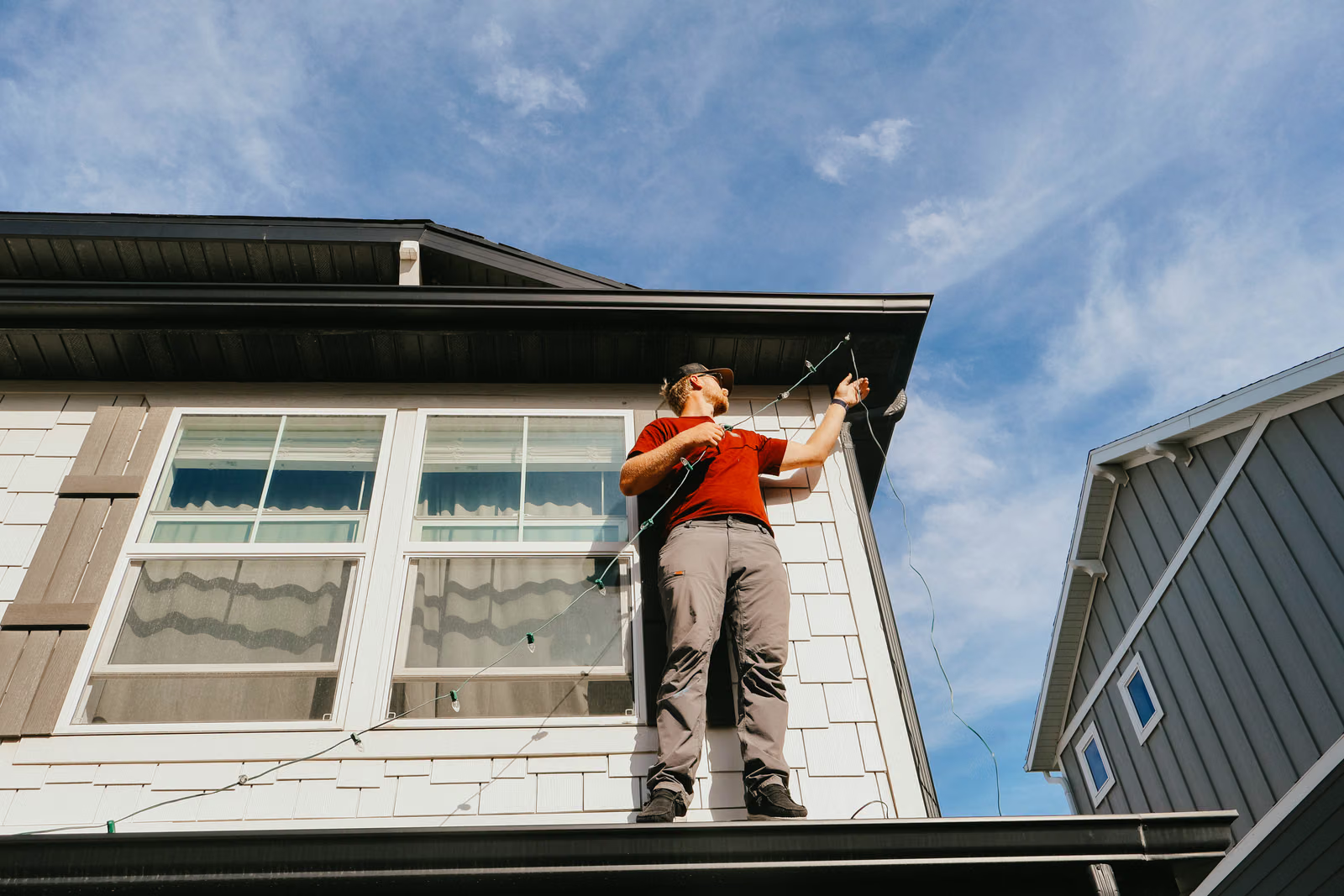
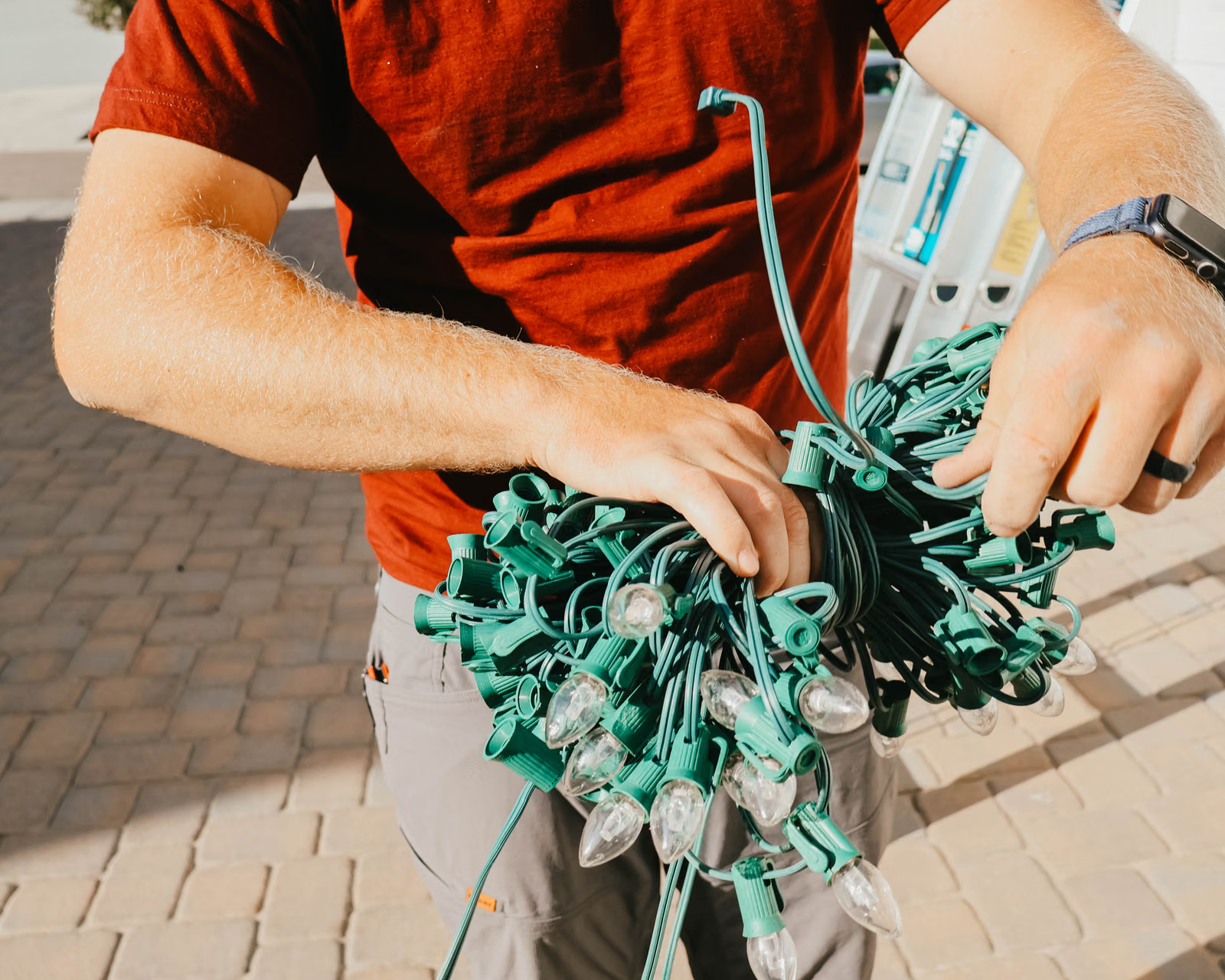
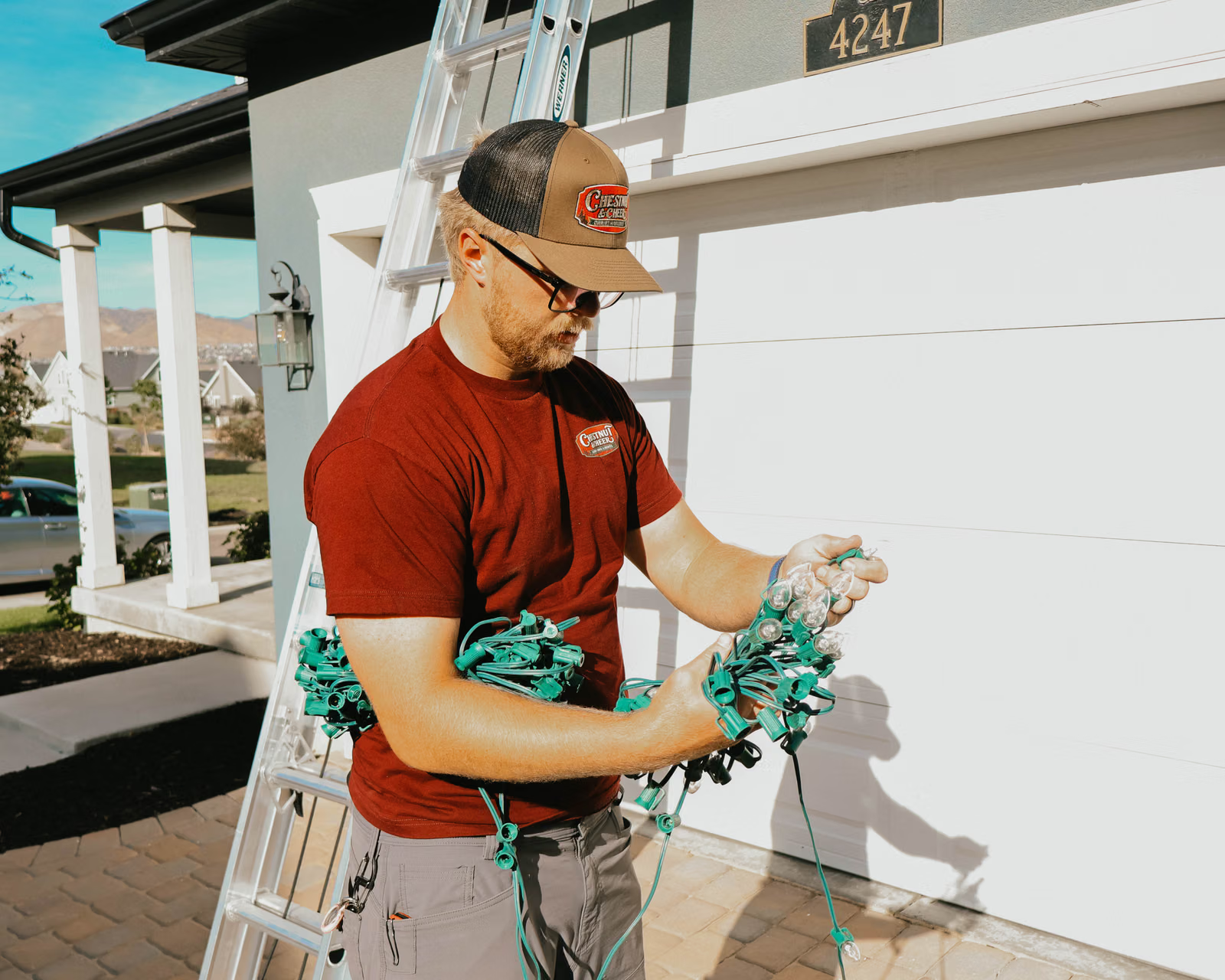
“We bring more lights than we expect to need, install everything, and then remove the excess so the lights are tailored specifically to your house.”
Know which product is designed to be customized
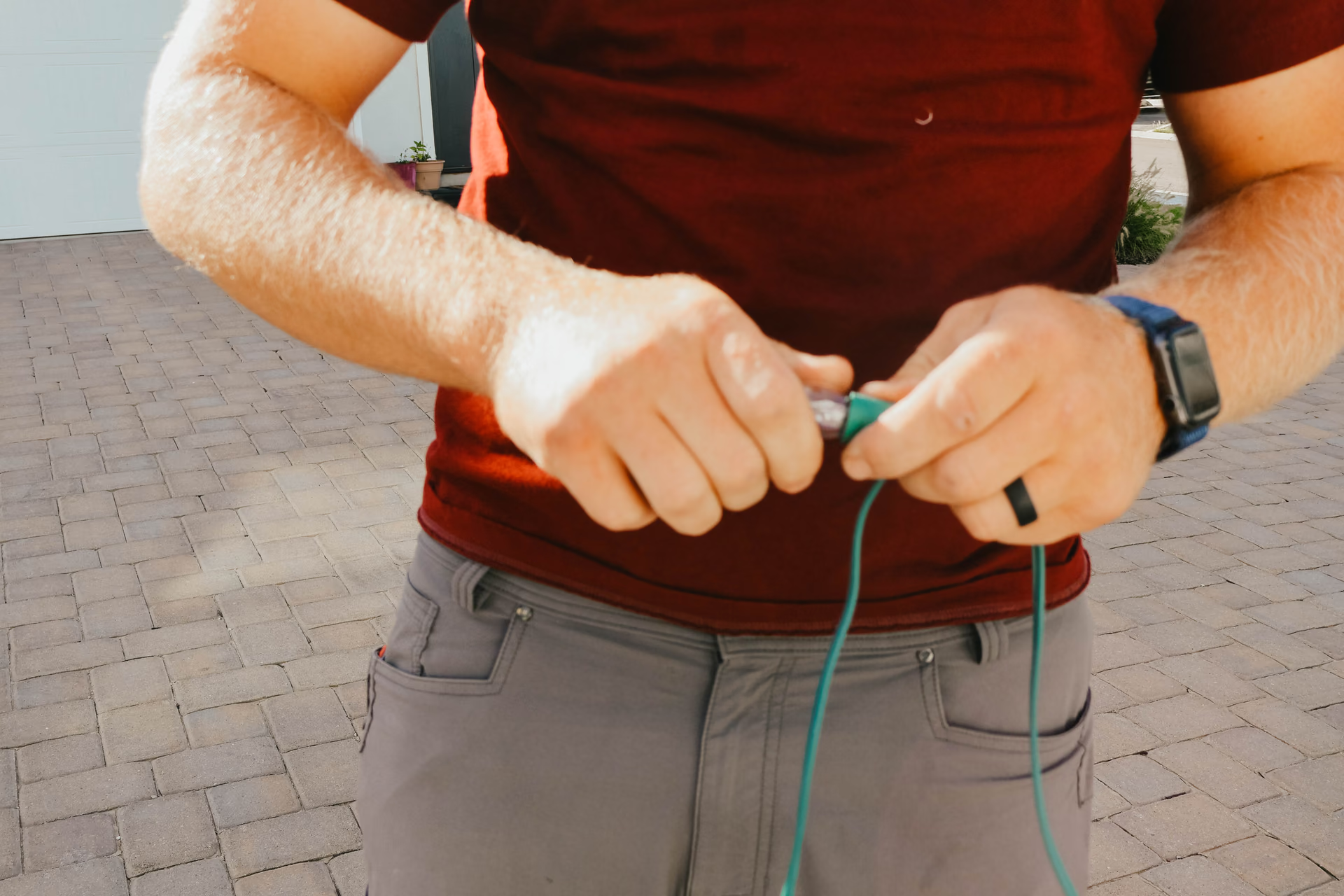
Professional C7 and C9 socket line can be measured to the architectural run, cut at an appropriate point, and finished with the correct plug or protective end cap. That lets the last socket land where the roofline actually ends.
Mini-light strands are a different electrical product and should not be cut. Their series sections and sealed construction are meant to remain intact. If a mini strand is too long, choose a different length or redesign the route.
Use lead cord for the spaces that should stay dark
A display may need to travel from an outlet to the first bulb or from one roof section to another without showing light in between. Lead cord and correctly installed plugs make that transition without using empty lamp sockets as an extension cable.
Professionals conceal safe connection routes behind downspouts, within suitable soffit areas, or beneath appropriate edges when the construction permits. The result should reveal the lights, not the wiring.
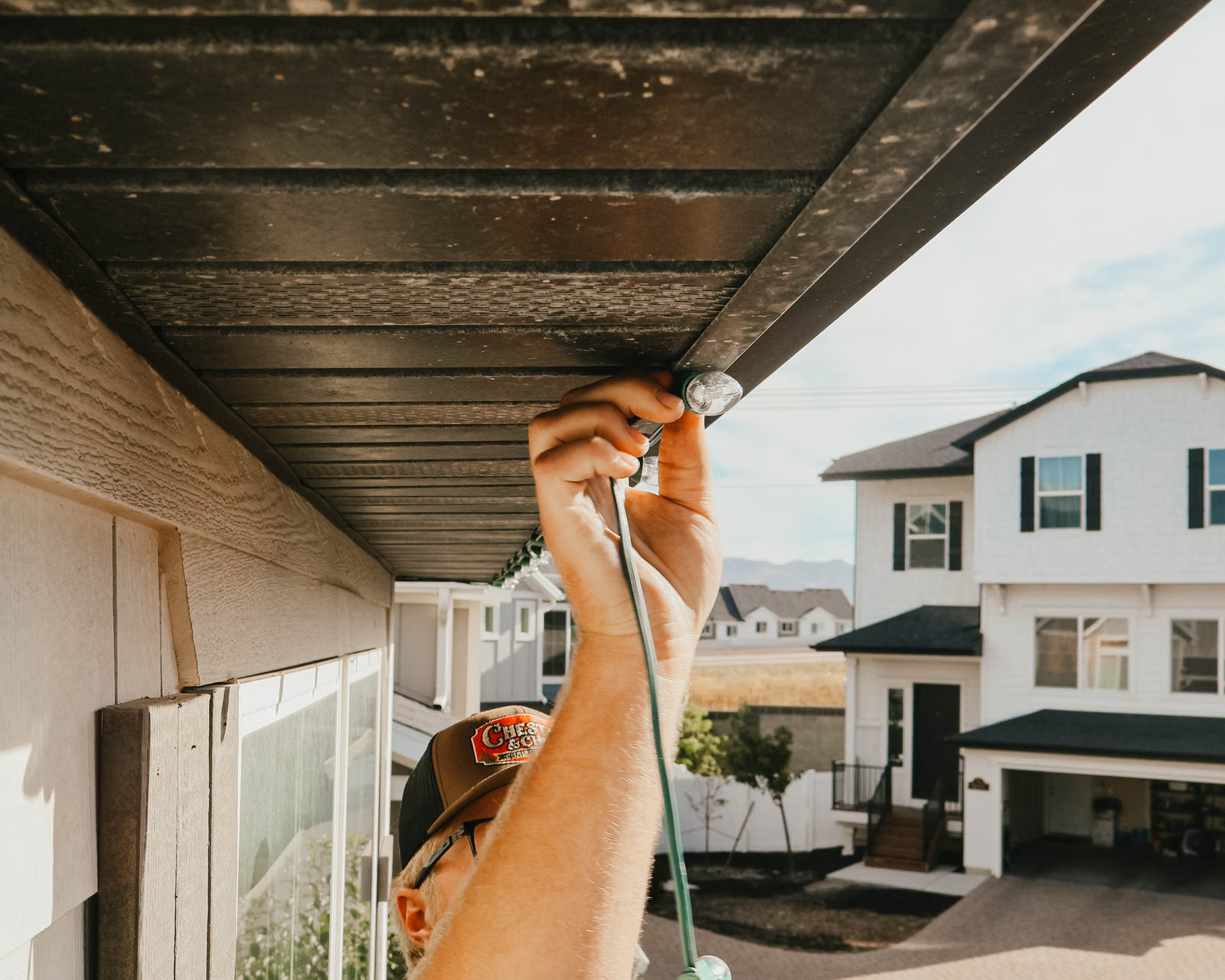
Final fitting happens on the architecture
Measurements establish material quantities, but the most accurate endpoint is confirmed as the line is clipped to peaks, corners, and transitions. Bringing extra line allows the installer to maintain spacing instead of stretching the last few sockets or stopping short.
Electrical customization is not a good place to improvise. Use components intended to work together, cap every approved cut end, follow manufacturer instructions, and review the GFCI and weather guide before powering an outdoor display.