
On this page
“You want to see a lit tree, not just haphazardly placed lights.”
Choose the method after the leaves are gone
A tree that stays full through winter can carry a broader spiral or branch-hopping pattern because the canopy provides visual mass. A deciduous tree that becomes open and sculptural usually benefits from wrapping the trunk and major branches individually. At night, the lights should reveal the tree’s natural form.
Decide whether the goal is a glowing canopy, an outlined branch structure, or a simple trunk accent. That choice controls both the light count and the labor much more than the tree’s height alone.
Use mini lights for most trees
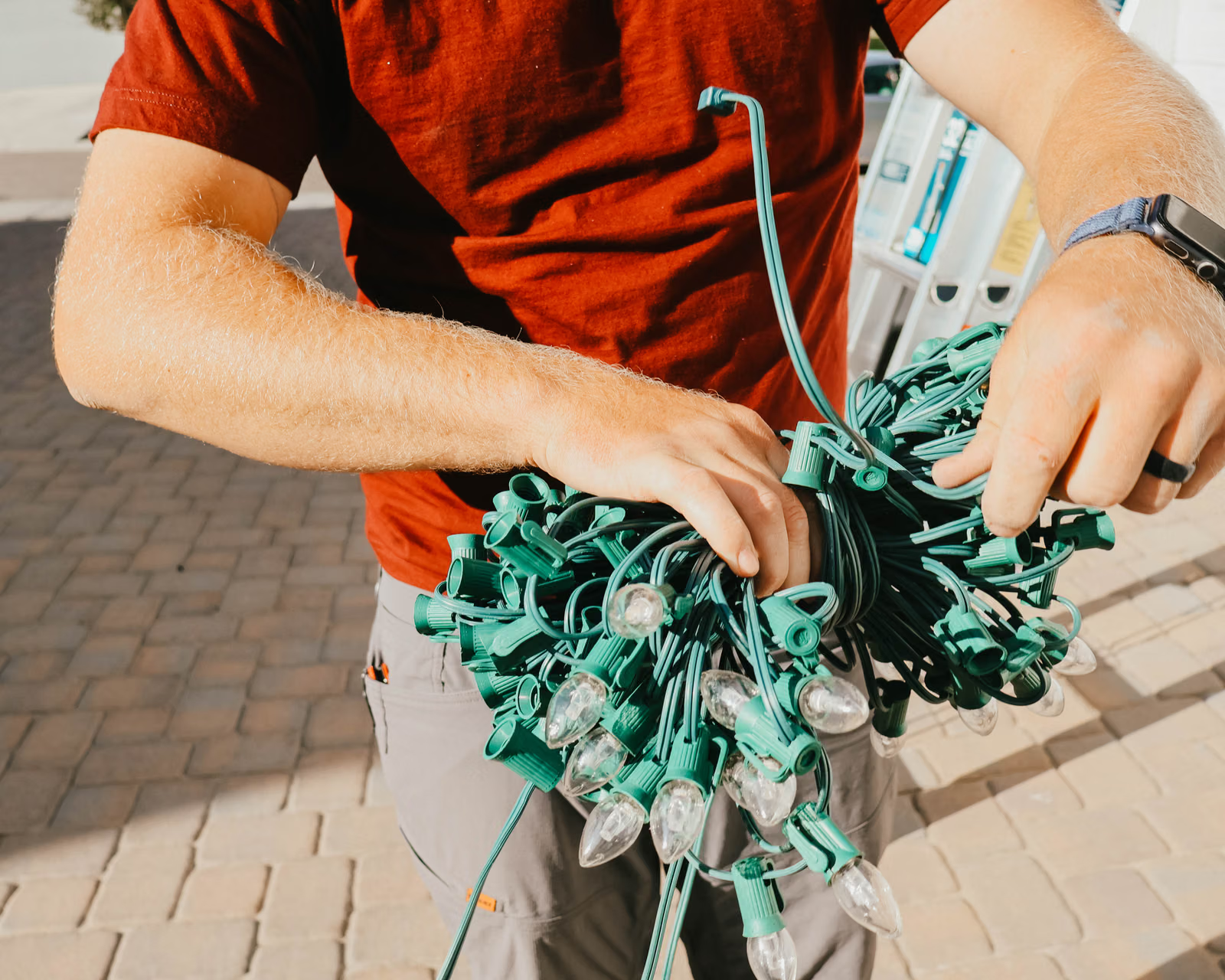
Mini lights have close spacing and a small visual scale, which makes them the practical choice for trunks and branches. C7 and C9 bulbs are usually better on rooflines or landscape stakes; most residential trees are not large enough for those bulbs to feel proportional inside the canopy.
If you are still choosing products, compare C7, C9, and mini lights before buying a large quantity.
Install for the January version of the job too
A good tree installation can still be a bad system if every plug is exposed, the top cannot be reached safely, several strands overload a weak route, or takedown requires untying a web of crossed wires.
Professionals plan the direction of travel, connection points, supported transitions, access to the top, and the order of removal. For a full-property plan, start with the professional Christmas light installation guide.